February 17, 2011

Cortez Village

I stopped in Siesta Key to spend a few days with one of my bff's, Mary, and of course we went geocaching on the first day there, but not before we stopped at the Tervis store south of town. Tervis tumblers are manufactured in the area.


Our geocaching for the day would take place in a quaint old fishing village: Cortez.


We had to figure out our first coordinates based on the historical sign at the old store. I was delighted to see Philma again and she joined us for the day. We walked in the nature preserve adjacent to the restored store and school house for our caches. The trails are a work in progress and should be quite nice when completed.


Phil and I locate one of our finds and get a smilie.  This is my first trip using my gps which Mary kindly showed me how to use so I would not have to read the manual!


Now why am I the one to replace the cache?


Mary and I take a break in front of some pretty red flowers. She and I have been geocaching together for   eight years now.


One of our last caches was down along where the old wharf was. I think this is where Phil got in all the fire ants. I was busy absorbing the local culture. This area was known as Hunter's Point until the 1880s. It became Cortez in 1888 and mail came by boat three times a week.


Commercial fishermen settled the area by the end of the 19th century, most coming from coastal North Carolina.


Near the fish market is a fine little find where we refreshed ourselves and ate supper. It is little places like this that you love to find when out in the middle of nowhere. The locals called the area east of Sarasota Bay south of the village "the kitchen" due to the large number of scallops, fish and other seafood. By 1897 it was a thriving fishing village even shipping to Tampa. Much was destroyed by the 1921 hurricane but the determined residents rebuilt.


This is the reason I was up looking for tums in the middle of the night. I can't believe it myself but I did have some help with the alligator tails.


For dessert we located another cache in this palm tree. They make a great hiding place.


A fixer upper in the neighborhood.


Chainsaw Charlie was not at work but I bet we could have given him a call and bought some art!


February 16, 2011

Marie Selby Gardens

Again I found an opportunity to use my reciprocal gardens pass so we stopped at the Marie Selby Gardens in Sarasota.


The gardens are located on the edge of the bay in downtown Sarasota.


I was surprised to look high in a tree near the water and see these orchids blooming.


This house on the property is a favorite for parties and weddings.


 The gardens specialize in epiphytes which are plants growing on other plants which do not damage those plants. This includes orchids, bromeliads, cacti, and ferns.


And they also have a fig tree.


Mary likes to get the perfect picture and sometimes that isn't all that easy.


February 15, 2011

Ford Edison Estates

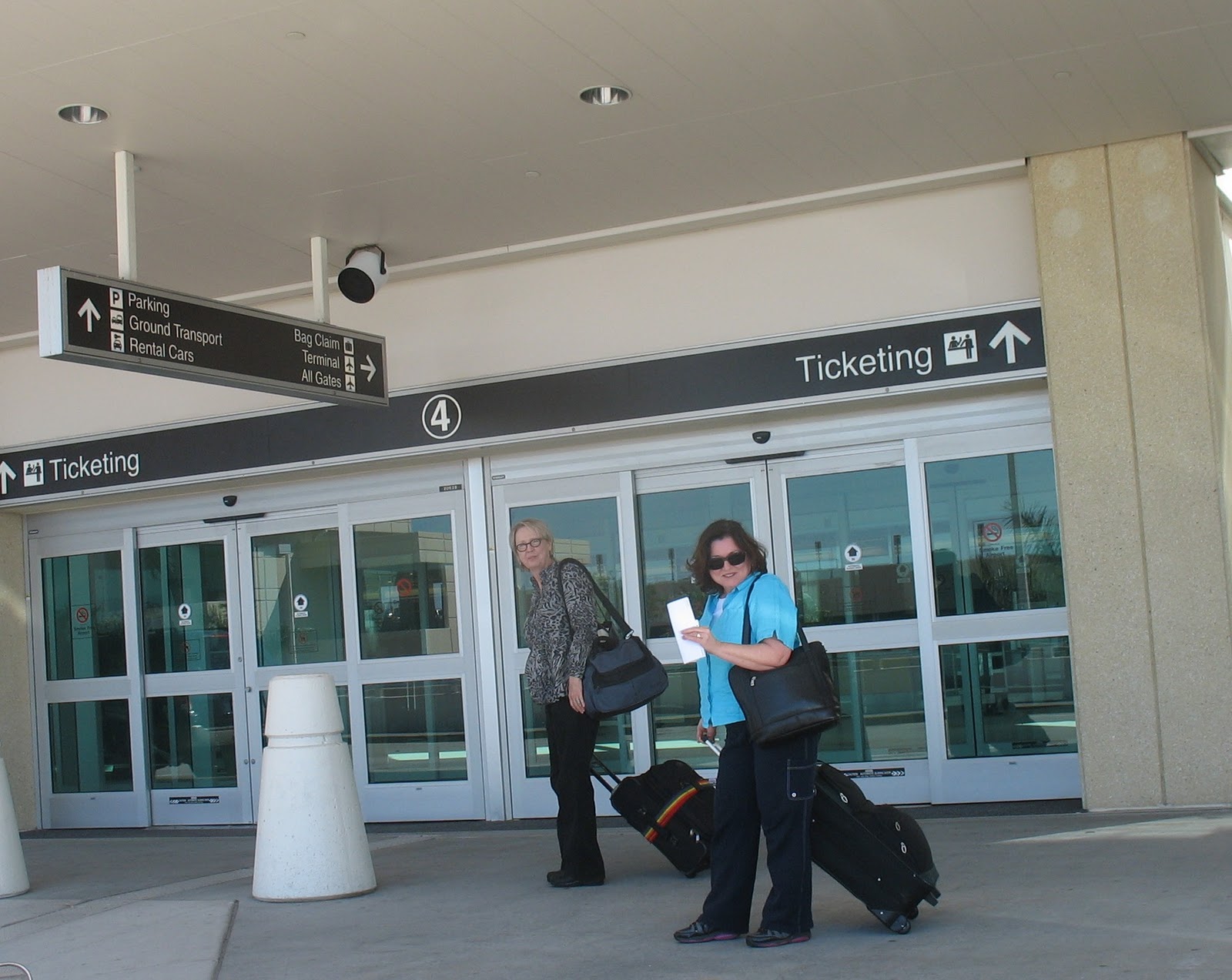
It seems that one week just flew by and we were disappointed to have to drop Darla and Chris at the airport.

The Ford Edison Estates were not that far from the airport and became our destination as we drove down McGregor Blvd. among the Royal palms.


Mary stands under the largest Banyon Tree in the United States located at the entrance.


Henry Ford had this 1918 Model T Ford Roadster outfitted specially for the camping trips he enjoyed with Thomas Edison, Harvey Firestone, and John Burroughs. I think even today I could make this work!


Mina Miller married Thomas Edison in 1886 and they created their winter estate in Fort Meyers that year. Pretty smart lady in my opinion.


Edison's estate was built in 1886 and remodeled slightly throughout the years. The family home, Seminole Lodge, is connected to the guest house on the far side by a pergola.


I can just picture men in one piece swim suits diving from this diving board while women sit nearby chatting in the shade.


The moonlight garden was built in the 1920s behind Edison's little office.  Notice the strands of light bulbs crisscrossing in the air.


Edison chose this property because of the stand of bamboo. He used bamboo for the filaments in his light  bulbs. A large aloe plant is in the foreground.


The old boardwalk leads out into the Caloosahatchie River. Building materials were brought by steamship up the river.


The guest house that is adjacent to Seminole Lodge.


Mr and Mrs Edison in 1920.


I was just intrigued by the fact that I was looking at Edison's light bulbs and record player. At the museum I was reminded about all his other inventions and they included many models in the displays.


Imagine dining here in the summer before air conditioning.


Henry Ford's property is next to Edison's also on the river.


Now I am seeing Ford's fords!! Amazing although I am not really  sure these belonged to him.
They might have been Edison's.  The Model T 1917 truck sold for around $500 while it would have taken $700 to purchase the 1929 Model A.


Ford's house was a bit small than Edison's.


There are plants and interesting trees all over the properties. Mrs. Edison was quite interested in gardening. Our Garvan Gardens membership allowed us to visit here for free.  Nice!


This Mysore fig was brought from China. Ford experimented with different types of trees to get rubber.


On the way home we stopped at the orchid shop for Mary to purchase some little hangers.


And then we passed the Thai Sushi Restaurant...brakes on!!!! This sushi boat was not ours but my salmon sushi and Mary's pad thai was delicious. I know nobody cares what I ate for dinner but I sure do!

February 13, 2011

Sanibel in the sunshine

 Sanibel Island, "the sea shell capitol of the world", is a place to which I could return time and again.  On our second visit we located the typical daily crowds as we first toured the Ding Darling Wildlife Refuge. Many birds winter in the region.

Chris, Darla, and I have spotted my favorite wading bird through the brush. What could it be?


In the distance was a rookery of roseatte spoonbills busily building nests. We could not get as close as we would have liked.


 This great blue heron seemed frozen in time and undisturbed by the many tourists snapping his photo.


 The bay had so many various species and the birds of a feather do flock together. This was a gathering of white pelicans which are quite rare.  They come down from Canada for the winter and are the largest bird, second to the California Condor.


We stopped at blind pass on Captiva Island and enjoyed the white sand and loads of seashells. Captiva is just north of Sanibel and joined by a bridge over the pass. It is a little difficult to walk barefoot on the beach with so many seashells.


 Chris, Darla, and I got in a little reading time in the sunshine.


The sun was bright but the wind was still a little chilly as the day wore on and we wore down.


We arrived at Fort Meyers Beach just in time for a magnificent sunset. The rows of condos catch the late  afternoon glow.


Mary and Chris waited patiently in front of the sand dunes for the last glimpse of the setting sun as it set on another fine day in south Florida.